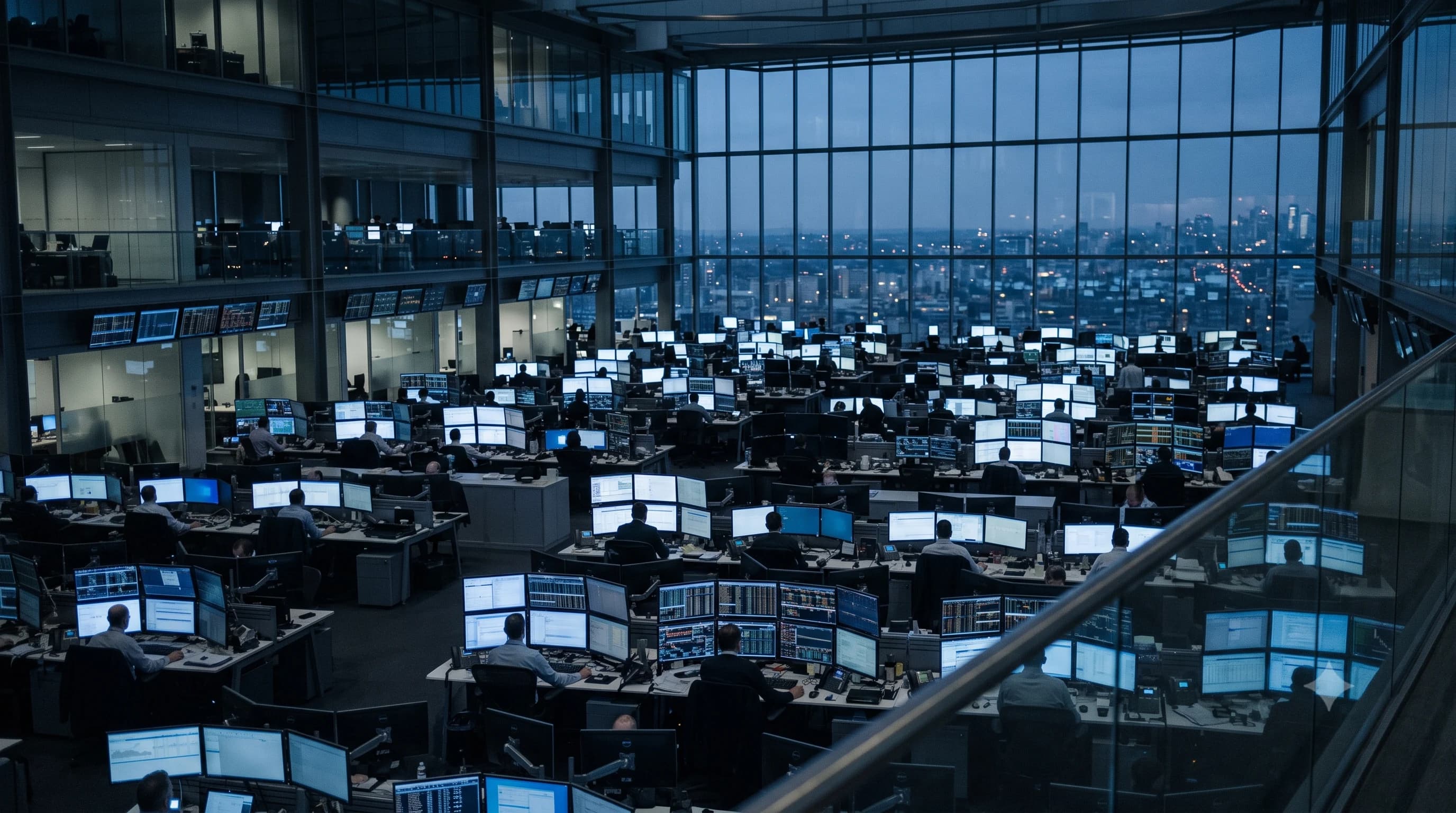
Sector · Financial Services
Your timestamps are only as honest as your time source
Every trade, transfer, order and audit record carries a timestamp, and regulation requires that timestamp to be traceable to UTC. In most firms the chain of traceability terminates at a GNSS antenna on the roof — a signal broadcast from 20,000km away at roughly the power of a car headlight, trivially jammed and increasingly spoofed.
Consequences of corrupted time in a trading environment are not hypothetical: sequence integrity breaks, best-execution evidence degrades, reconciliation fails silently, and the firm’s RTS 25 position becomes indefensible — all without a single system reporting a fault.
DORA extends the exposure: timing is ICT infrastructure, and ICT infrastructure must be risk-managed and tested. A firm that has never tested its clock estate against interference has an untested critical dependency, documented nowhere.
What resilient looks like: measured (not quoted) holdover; a GNSS-independent traceable time source; interference detection distinct from fault alarms; and an evidence pack a regulator can read.
The result flags RTS 25 and DORA applicability automatically.