Threat
What is actually happening
Jamming floods GNSS frequencies with noise so receivers cannot lock onto genuine satellite signals. Position and timing outputs degrade or fail.
Spoofing is worse: counterfeit signals deceive the receiver into reporting positions, and times, that are wrong — confidently. Systems downstream act on false data without any error being raised.
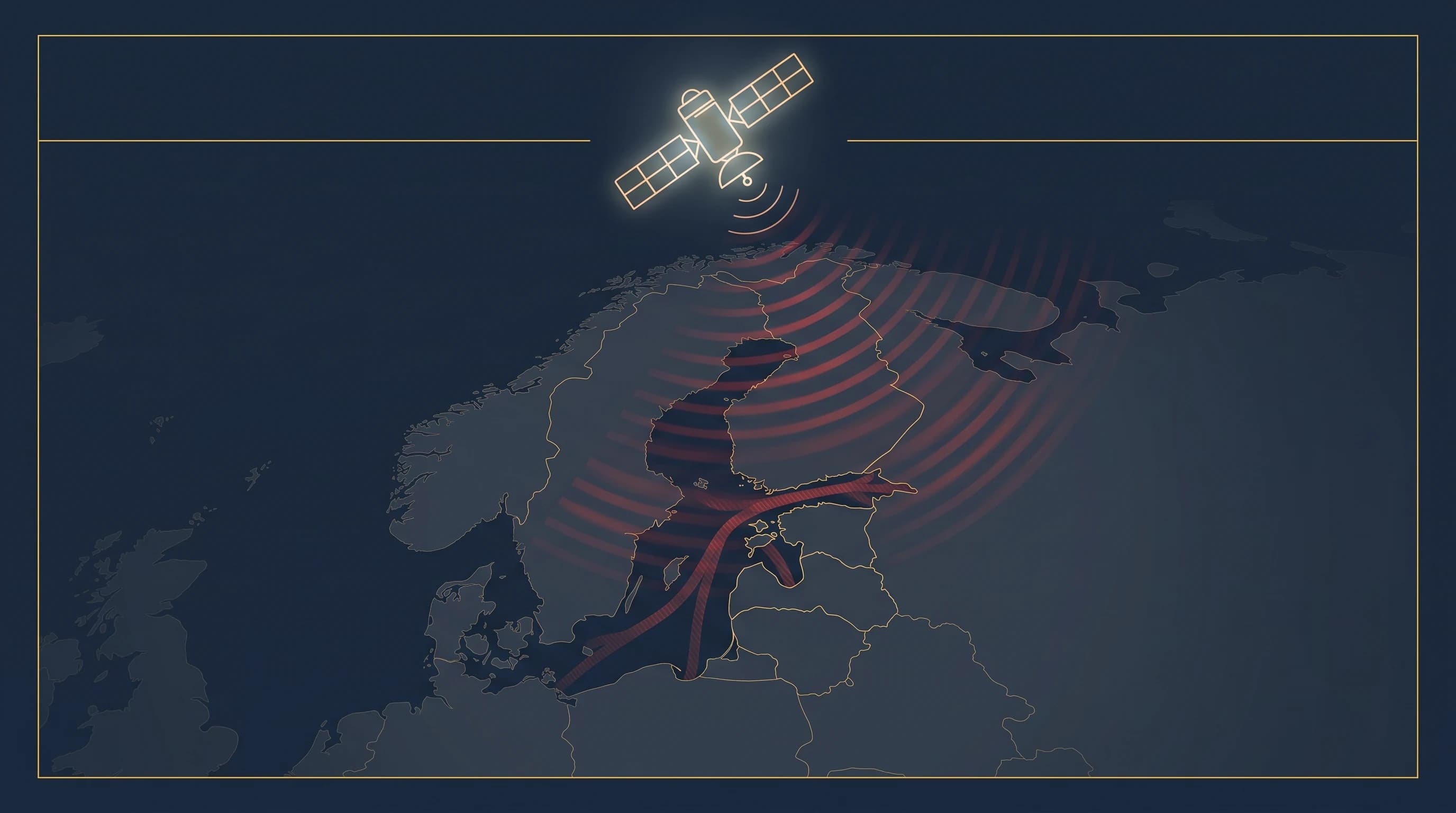
Since 2022, aviation and maritime authorities have recorded a sustained rise in both, concentrated around conflict zones but extending well beyond them — across the Baltic, the Mediterranean, the Middle East and the Arctic. In 2026, monitoring from low Earth orbit indicated that interference over Europe is visible from space, and research has begun attributing some wide-area events to space-based sources.
The dependency nobody audits
Ask a board what GPS does for them and they will say navigation. For most UK organisations — and almost all finance and data infrastructure — the real dependency is time.
GNSS is the default source of precise time for transaction timestamping, network synchronisation, event ordering across distributed systems, and regulatory records. It arrived silently, embedded in equipment, and it is rarely monitored, rarely backed up beyond a few hours of holdover, and almost never tested against deliberate deception.
A spoofed position announces itself eventually — something visibly ends up in the wrong place. A spoofed clock does not. Records are simply wrong, in sequence-breaking, compliance-breaking ways, until someone reconciles them.
The cost picture
London Economics, for the UK Space Agency, estimated the impact of GNSS disruption to the UK economy at £1.42bn per 24 hours and £7.64bn over seven days, across seven priority sectors. The same body of work puts the annual benefit of GNSS to the UK at £13.62bn — a measure of how deeply it is embedded.
The scale is national. The vulnerability is yours to measure.
Start the assessment →